Read the book: «English for Photographers»
© Anna Uglanova, 2026
ISBN 978-5-0069-6906-3
Создано в интеллектуальной издательской системе Ridero
This book is dedicated to Zhenia Sudakova
An enquiring student
A talented photographer
And a dear friend
FOREWORD
English for Photographers is an opportunity to communicate with like-minded people on topics related to photos and videos.
This course is intended for those who already have some experience in practicing English (pre-intermediate, intermediate), can read and write simple texts and express their thoughts and opinions on issues not related to photography and videography.
You will practice in writing your biography and CV, working with clients, describing images and videos, as well as corresponding and taking part in discussions on a wide range of professional topics.
UNIT 1.
PROFESSIONAL TERMINOLOGY
General terms
1. Label the pictures with the words and expressions.
a. a photograph/a photo/a picture
b. a photographer
c. a cameraperson/a camera operator
d. to photograph/to take photos/to get a shot
e. a crew/a film crew
f. to edit/to retouch a photo
g. to crop a photo
h. a photoshoot

2. Match the words and expressions to their Russian equivalents.
1. a film reel a. черновой материал
2. a location b. отснятый материал
3. a rough cut c. катушка с плёнкой
4. a shooting day d. отредактированная версия
5. an edit e. место съёмки
6. footage f. съёмочный день
Equipment and its components
The most popular types of cameras

DSLR (or digital single lens reflex) cameras take photos to the next level of image quality. This more «serious» type of camera is best known for delivering remarkably sharp and spectacular images, with beautiful background bokeh, and even high resolution videos with the help of their advanced sensors, manual settings, and wide range of interchangeable lenses.
Today, professional photographers and videographers from around the world mostly use DSLRs (now alternatively known as hybrid single reflex lens cameras or HDSLR) for commercial purposes. While they are considered high-end, there are more affordable entry-level DSLRs for beginners. They are suitable for almost every kind of photography out there, so literally anyone – from hobbyists to event and sports photographers – can opt for this type of camera.
Pros:
Fully customizable settings
Large sensors for cleaner images
Optical viewfinder
High-resolution photo output
Full HD to UHD video output
Wide variety of camera body and lens choices
Cons:
Bigger and bulkier
Higher cost
Requires ample know-how

Mirrorless cameras are basically more compact DSLRs without the internal mirror that reflects light onto the sensor.
What’s interesting about mirrorless cameras is that they are now capable of capturing incredible, high-resolution images with even faster shutter speeds and record ultra HD videos that only the most expensive, higher-end DSLRs can produce.
The main reason why many still prefer DSLRs, however, is that they have access to a bigger collection of lenses. However, mirrorless cameras are great investments considering their growing collection of lenses.
Overall, it’s a combination of two popular types of digital cameras – a point-and-shoot for its compact size and somewhat simpler controls, and a DSLR for its interchangeable lenses and impressive output.
Pros:
Electronic viewfinder
Smaller and lighter
Simpler operation and controls
Faster and better for video
Higher video quality even in lower-end models
Shoots more images at faster shutter speeds
Cons:
Shorter battery life
Slower autofocus
Fewer lenses and accessories

Compact digital cameras literally allow anyone to capture beautiful images by simply pointing the camera at the subject and clicking the shutter. Also known as a point-and-shoot camera, it is the most user-friendly of all camera types. It is smaller and lighter, doesn’t require film or extra lenses, and does all the hard work of automatically adjusting its settings to deliver well-exposed photos every time. You won’t have the freedom of adjusting the settings to your liking, but with a good artistic eye and a knack for composition, you should have no problem producing great photos.
This walk-around digital camera is incredibly handy and surprisingly very durable, which is why you’ll probably still see people using their digital compact cameras from over a decade ago. It fits right in your pocket or a small camera pouch, so it’s the perfect choice for photography enthusiasts who want to have the convenience of being able to take higher resolution snapshots (compared to most smartphone cameras) whenever, wherever.
Pros:
Very user-friendly
Light and compact
No need for film or extra lenses
Full auto mode
More affordable
Cons:
Usually can’t customize shutter speed and aperture
Limited aperture and zoom range
Noisier photos due to small sensor
Lower resolution
Slower focus

Common action cameras like the GoPro can fit in the palm of your hand, but they’re some of the most durable and versatile types of digital cameras that offer very high-resolution output. A wide range of accessories like waterproof housing and mounts allow the user to attach action cameras to helmets, bicycles, and even drones, which enable hands-free shooting in different types of situations. This opens up a whole new world of photographic possibilities, as this type of camera allows you to capture impressive wide-angle photos and videos with sound from almost any angle and environment, whether underwater or on top of a mountain. If you’re the adventurous or sporty type and simply want to take breathtaking photos and videos that will «take you back» to those moments, action cameras are for you.
Pros:
Rugged and compact
Lightweight
Versatile and mountable on almost any surface
Remote view and shutter via smartphone
Cons:
Viewfinder too small, if available
Exposure settings not fully customizable
Fixed focus
Limited digital zoom

The 360-degree camera takes half dome to full-circle panoramic photos and videos using back-to-back lenses. Like action cameras, some of them are also water resistant and mountable on many surfaces, such as on top of cars, helmets, or drones. Above all, they take the most realistic pictures and videos with stunning panoramic views that you can truly immerse yourself in, virtual reality style. It’s a very good camera choice for taking vacation photos that you can proudly show off to your loved ones and on social media. After all, we still can’t get enough of the Streetview-style photography and videography. However, because of its non-traditional output, images cannot be printed unless they are cropped as a rectangular panoramic frame.
It can also be a challenge to produce perfect panoramic shots because a lot can go wrong with the image stitching and composition (especially since it’s hard to hide the camera director in the shots). But when it works, the results can be truly exceptional. While mostly geared toward hobbyists, professional photographers can also benefit from this type of camera if they wish to create highly unique, immersive digital photos that allow them to capture a certain scene from all angles.
Pros:
Small and lightweight
Versatile and mountable on almost any surface
Takes very realistic 360-degree photos and videos
Allows live view or streaming
Cons:
Lower resolution output
Sensitive to camera shake and blurring
Fixed focus
Can be challenging to frame shots
For digital viewing only
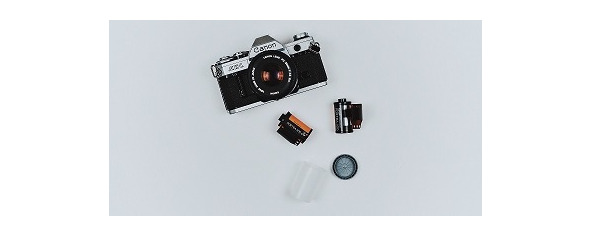
Film cameras may seem outdated in our new digital world, but they are by no means obsolete. Today’s film cameras provide more artistic output than ever before. Much to the delight of film photography enthusiasts, there are still classic film cameras being sold today with improved bodies and enhanced capabilities. The younger generation has learned to love film cameras, thanks to the birth of instant and lomography cameras, which produces (and sometimes prints out) vintage-style photos with vignettes with every click of the shutter. Rangefinder cameras, which manually measure subject distance, have been improved while retaining the vintage body and analog settings.
Medium format film cameras provide an even bigger surface frame and is widely-used by gallery artists for its capability to develop huge prints without losing image quality and to capture natural-looking, wide-angle shots as our eyes actually see them in the real world. Film cameras obviously require more hard work in achieving your desired images, but they are loved for their unmatched ability to produce gorgeous, artistic photos that are great for galleries and photo albums.
Pros:
Image resolution and size (for medium and large format)
Beautiful, artistic photos
Vintage-looking hardware
Cheap, good quality lenses
Cons:
Analog settings
Expensive and recurring film cost
No internal light meter
Risk of parallax, focus, and exposure errors
3. Answer the questions.
1. What is the best camera for photography, to your mind?
2. What camera (s) do you use? Describe it (them) using the words from the text.
3. What is your dream camera? Why?
4. Match English and Russian terms.
1. a digital single-lens reflex camera (DSLR)
2. a mirrorless interchangeable-lens camera (MILC)
3. a single-lens reflex camera (SLR)
4. a twin-lens reflex camera (TLR)
a. двухобъективный зеркальный фотоаппарат
b. однообъективный фотоаппарат
c. цифровой однообъективный зеркальный фотоаппарат
d. беззеркальная камера со сменными объективами
Types of lenses
There are two basic categories of camera lenses:
Prime lenses
Primes have a fixed lens focal length, making them faster and sharper. While prime lenses are less flexible due to the fixed focal length, they are also fast and lightweight, making them easy to travel with.
Zoom lenses
Zooms use a series of lenses to allow different focal lengths from a single lens, making them more flexible but not as fast. They contain more glass, which aids in their flexibility, but they also tend to be bigger and heavier than prime lenses.
Within both prime and zoom types of lenses, there are a variety of lenses, all with different focal lengths.
1. Macro Lenses
This type of camera lens is used to create very close-up, macro photographs. They have a unique design that allows them to produce sharp images at extremely close range. These lenses are great for nature photography, enabling you to capture an enormous amount of detail in one image.
2. Telephoto Lenses
Telephoto lenses are a type of zoom lens with multiple focal points. These types of lenses are great for isolating a subject that is far away. However, such great magnification comes at the price of a narrower field of view. In the same way that you would use a telescope to look at stars and planets, a telephoto lens is used for focusing in on distant objects. Many sports photographers use telephoto lenses to provide a sense of intimacy with the subjects on the field (the players) while standing on the sidelines or in the bleachers. There are many different types of telephoto lenses, and some can be quite large, heavy, and expensive, so take some time in choosing the right telephoto lens.
3. Wide Angle Lenses
Wide angle lenses are ideal for fitting a large area into your frame. This is especially useful for landscape photography or street photography. With wide angle lenses, almost everything is in focus, unless your subject is very close to the lens.
4. Standard Lenses
Standard lenses can be used for a variety of different types of photography. Their focal lengths fall somewhere in the middle, usually between 35mm and 85mm. A zoom lens within this range will have a small enough focal length at the bottom end to take a wider angle, full-frame photo, and a large enough focal length at the top end to zoom in on subjects.
5. Specialty Lenses
Finally, there are some more specialized camera lenses that can impart a unique look and feel to your photographs. There are several types of specialty camera lenses, but a few of the most prominent examples are:
– fisheye lens
A fisheye lens is an ultra-wide-angle lens that can take in a full 180 degree radius around it. Fisheye lenses are so named because they distort an image’s field of view, making even a room in a house look like a bubble.
– tilt shift lens
A tilt shift lens distorts perspective, making things look smaller than they really are – almost as if they are toys.
– infrared lens
These lenses play with light rather than perspective, filtering out all light waves except infrared for a unique visual effect.
5. Choose the correct item.

The components of a camera
aperture – диафрагма
camera body – корпус камеры
display – дисплей
flash – вспышка
flash mount – крепление для вспышки
gimbal – стабилизатор для камеры
lens mount – крепление для объектива
lens release button – кнопка отсоединения объектива
light meter – фотоэкспонометр
main dial – диск режимов фотоаппарата, селектор режимов
neck strap – ремешок для камеры
neck strap lug – место крепления ремешка для камеры
shutter – затвор
shutter release button – кнопка спуска затвора
tripod stand – штатив
viewfinder – видоискатель
zoom ring – кольцо зуммирования объектива
6. Fill in the gaps the words and expressions.
1. Using manual mode isn’t all guesswork – a ________________________ built into the camera helps guide those decisions, indicating if the camera thinks the image is over or under exposed. Metering is actually based on a middle gray, so having lighter or darker objects in the image can throw the metering off a little bit. Metering modes indicate how the meter is reading the light.
2. _______________________________ – press it to take the picture.
3. You probably know that the _______________________________ is a burst of light. Normally, it fires at the beginning of the photo.
4. ___________________________________ is the size of the opening in the lens. Think of the lens as a window: large windows let in more light, while small windows let in less light.
5. That’s the hole you look through to take the picture. Some digital cameras don’t have one and just use the screen, but all DSLRs and most mirrorless cameras use them. Certainly, it’s a ______________________________.
Photography Terminology
7. Match.
1. autofocus a. режим серийной съёмки
2. overexposed b. шум
3. underexposed c. затемненный, недосвеченный
4. noise d. соотношение сторон
5. burst mode e. глубина резкости
6. manual mode f. ручной режим
7. aspect ratio g. автофокус
8. depth of field h. засвеченный, пересвеченный
NOISE – шум
Noise is simply little flecks in an image, also sometimes called grain. Images taken at high ISOs have a lot of noise, so it’s best to use the lowest ISO you can for the amount of light in the scene.
BURST MODE – режим серийной съемки
You can take photos one at a time. Or, you can turn the burst mode on and the camera will continue snapping photos as long as you hold the button down, or until the buffer is full (which is a fancy way of saying the camera can’t process any more). Burst speeds differ based on what camera you own, some are faster than others. Just how fast is written in «fps» or frames (pictures) per second.
MANUAL CONTROL/MODE – ручной режим
Manual mode allows the photographer to set the exposure instead of having the camera do it automatically. In manual, you choose the aperture, shutter speed and ISO, and those choices affect how light or dark the image is. Semi-manual modes include aperture priority (where you only choose the aperture), shutter priority (where you only choose the shutter speed) and programed auto (where you choose a combination of aperture and shutter speed together instead of setting them individually). Manual can also refer to manual focus, or focusing yourself instead of using the autofocus.
ASPECT RATIO – понятие в фотографии, характеризующее формат изображения. Соотношение сторон экрана или oтношение ширины кадра к высоте.
If you’ve ever printed images before, you’ve probably noticed that an 8 x 10 usually crops from the original image. That’s due to aspect ratio. Aspect ratio is simply the ratio of the height to width. An 8 x 10 has an equal aspect ratio to a 4 x 5, but a 4 x 7 image is a bit wider. You can change the aspect ratio in your camera if you know how you’d like to print your image, or you can crop your photo when you edit it to the right ratio.
DEPTH OF FIELD – глубина резкости пространственного изображения; объёмность поля зрения.
It’s the distance between the nearest and furthest elements in a scene that appear to be «acceptably sharp» in an image. Depth of field is a photography term that refers to how much of the image is in focus. The camera will focus on one distance, but there’s a range of distance in front and behind that point that stays sharp – that’s depth of field. Portraits often have a soft, unfocused background – this is a shallow depth of field.
ISO – это светочувствительность фотокамеры к свету.
The ISO determines how sensitive the camera is to light. For example, an ISO of 100 means the camera isn’t very sensitive – great for shooting in the daylight. An ISO 3200 means the camera is very sensitive to light, so you can use that higher ISO for getting shots in low light. The trade off is that images at high ISOs appear to be grainy and have less detail. ISO is balanced with aperture and shutter speed to get a proper exposure.
EXPOSURE – экспозиция
Exposure is how light or dark an image is. An image is created when the camera sensor (or film strip) is exposed to light – that’s where the term originates. A dark photo is considered underexposed, or it wasn’t exposed to enough light; a light photo is overexposed or exposed to too much light. Exposure is controlled through aperture, shutter speed and ISO (more on those last two in a bit). Exposure is also subjective – there is no «right» exposure.
EXPOSURE COMPENSATION – коррекция экспозиции, компенсация экспозиции, экспокоррекция.
Exposure compensation is a way to tell the camera that you’d like the exposure to be lighter or darker. Exposure compensation can be used on some automated modes and semi-automated modes like aperture priority. It’s measured in stops of light, with negative numbers resulting in a darker image and positive ones creating a brighter shot.
BOKEH – боке, размытость, нечеткость.
Bokeh is the orbs created when lights are out of focus in an image. It’s a neat effect to have in the background of a photo, created through wide apertures.
FLASH SYNC – синхронизация фотовспышки, согласование моментов срабатывания фотовспышки и затвора фотоаппарата, необходимое для полноценного экспонирования импульсным освещением фотосенсора.
Синхронизация может осуществляться вручную или автоматически.
You probably know that the flash is a burst of light – flash sync determines when the flash fires. Normally, the flash fires at the beginning of the photo, but changing the flash sync mode adjusts when that happens. The rear curtain flash sync mode, for example, fires the flash at the end of the photo instead of the beginning.
HOT SHOE – разъем на фотоаппарате для электрического присоединения аксессуаров.
Hot shoe is the slot at the top of a camera for adding accessories, like the aptly named hot shoe flash. This has nothing to do with footwear, or temperature.
RAW – формат цифровых файлов изображения, содержащий необработанные данные об электрических сигналах с фото матрицы цифрового фотоаппарата. Название англ. ’raw’, т.е. «сырой» такие файлы получили потому, что они не обработаны.
RAW is a file type that gives the photographer more control over photo editing. RAW is considered a digital negative, where the default JPEG file type has already been processed a bit. RAW requires special software to open, however, while JPEG is more universal.
WHITE BALANCE – баланс белого.
Your eyes automatically adjust to different light sources, but a camera can’t do that – that’s why sometimes you take an image and it looks very blue or very yellow. Using the right white balance setting will make what’s white in real life actually appear white in the photo. There’s an auto white balance setting, but like any automatic setting it’s not always accurate. You can use a preset based on what light you are shooting in like sun or tungsten light bulbs, or you can take a picture of a white object and manually set the white balance.
8. Translate.
1. фокус, фокусироваться a. overhead light
2. выравнивающий свет b. accent light
3. рисующий свет c. resolution
4. разрешение d. focal length
5. выдержка e. hard light
6. фокусное расстояние f. background light
7. точечный свет g. focus
8. фоновый свет h. soft light
9. мягкий свет i. key light
10. жёсткий свет j. fill light
11. верхний свет k. shutter speed
FOCUS – фокус, фокусироваться
When your eyes focus on an object that’s close to you, the objects far away will appear blurry.
The common photography term «focus» has the same meaning. Something that is in focus is sharp, while an object that is out-of-focus isn’t sharp. Different focus areas determine if the camera is focusing on multiple points or one user-selected point.
Словосочетания:
to bring smth into focus – навести на резкость, сфокусировать
focus control – регулировка фокуса
ACCENT LIGHT – точечный акцентирующий свет; направленное освещение; акцентирующий свет.
The directional lighting, the task of which is to highlight details or the whole object to attract the attention to them.
BACKGROUND LIGHT – фоновый свет
A background light is used to illuminate the background area of a set.The background light will also provide separation between the subject and the background.
KEY LIGHT – рисующий свет.
The key light is the most important light in the range of lights.
SHUTTER SPEED – скорость срабатывания фотографического затвора.
The shutter is the part of the camera that opens and closes to let light in and take a picture. The longer the shutter stays open, the more light that is let in. But, anything that moves while the shutter is open will become a blur, and if the entire camera moves while the shutter is open the whole image will be blurry – that’s why tripods are necessary for longer shutter speeds.
The free sample has ended.